Afghan rugs, world renowned for their high-quality weave and intricate detail, evoke a powerful image of Afghanistan's rich history. A tradition dating back thousands of years, the complicated and time consuming process of rugmaking requires 100% silk and many artisans to complete, in many cases making the resulting price tag too spendy for the average consumer.
Thankfully, the artisans at Turkmen Women Actives Rights Association Afghanistan (TWARA), a Kabul-based NGO that hires and trains Afghan artisans and refugees living in Pakistan, have found a way to make Afghan rugs more accessible to the general public. Working with sheep's wool purchased at the local market, TWARAs 100% felt rugs aren't just animal friendly, they're easier on the pocketbook.
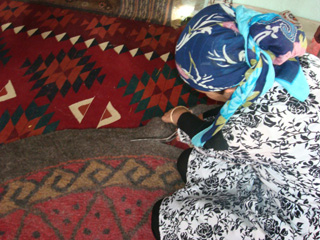
Rugs are created by entire families. Typically, men complete the more labor intensive part of the process, rolling and pressing the rugs in reed mats to ensure their tight weave while women wash, sort and tint the wool, and then sew the edges around the final piece. TWARA employs ten families that work together to weave contemporary decor inspired by ancient history.
- This 'Welcome' doormat measures 21" x 28" with a white base and multi-colored polka dots!
How to Care For Your Rug
Wool is stain-resistant and non-absorbent by nature, which makes cleaning easy. Just shake, sweep or vacuum your rug free of dirt. If you vacuum, make sure not to use a setting with a beater bar. If your rug requires a deeper cleaning, dampen the affected area with water and then spot clean using a mild non-bleach soap. Rinse the area thoroughly and remove excess water, and then lay the rug flat to dry. Don’t put your new rug in the washing machine!
Handmade in Afghanistan and fair trade imported.
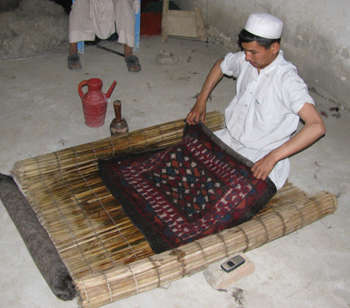
Rug-weaving is a complicated and time-consuming process that often takes many artisans to complete. Typically, men do the most labor intensive part of the rolling the rugs, while women wash, sort, tint and begin to design a wool outline on a reed mat. Once the outline is completely laid out, the outline is filled in with wool, sprayed with hot water and rolled up inside the natural mat as tightly as possible and tied with a rope.
The roll is rolled back and forth between two people for several hours, causing it to tighten even further. Finally, when the rug has been rolled as tightly as possible, its unrolled and laid out in the sun to dry. After the rug has dried, the woman trim and stitch and sew the edges of the final piece. TWARA employs ten families that work together to weave contemporary decor inspired by ancient history.
Process of Felt Carpet Making
1. Dyeing the Wool w/ Natural Plant-Based Colors
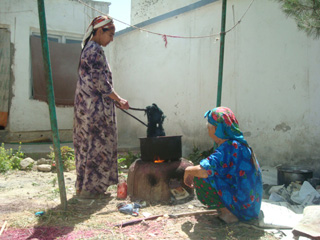
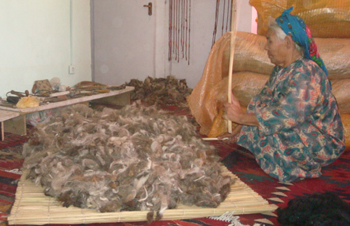
2. Fluffing the Wool
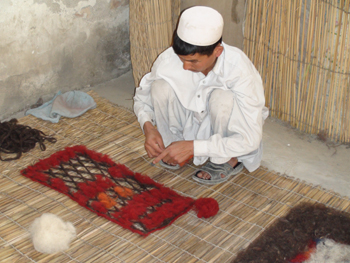
3. Creating the Design
4. Add Bottom Layer to Carpet
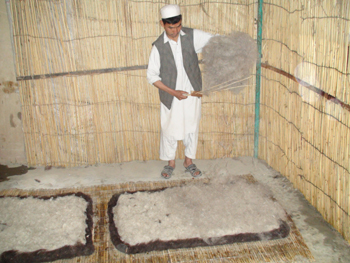
5. Add Hot Water
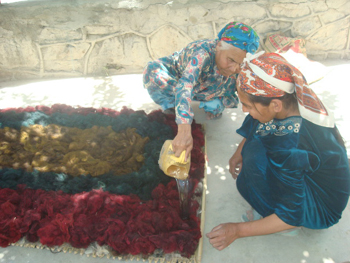
6. Roll Carpet in Grass Mat
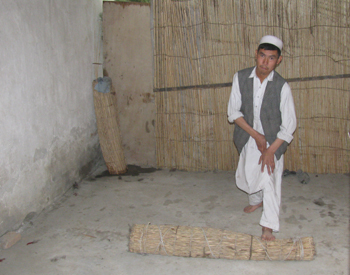
7. Roll Carpet w/ Arms
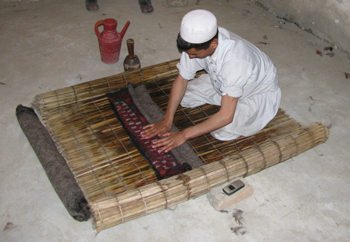
8. Dry Carpet
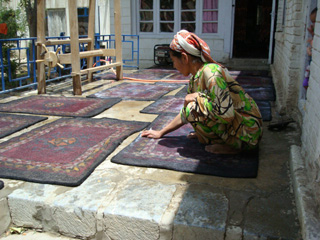
9. Hem Carpet
Caring for your rug
Wool is stain-resistant and non-absorbent by nature, which makes cleaning easy. Just shake, sweep or vacuum your rug free of dirt. If you vacuum, make sure not to use a setting with a beater bar. If your rug requires a deeper cleaning, dampen the affected area then spot clean with a mild non-bleach soap. Rinse the area thoroughly and remove excess water, then lay the rug flat to dry. Don't put your new rug in the washing machine!